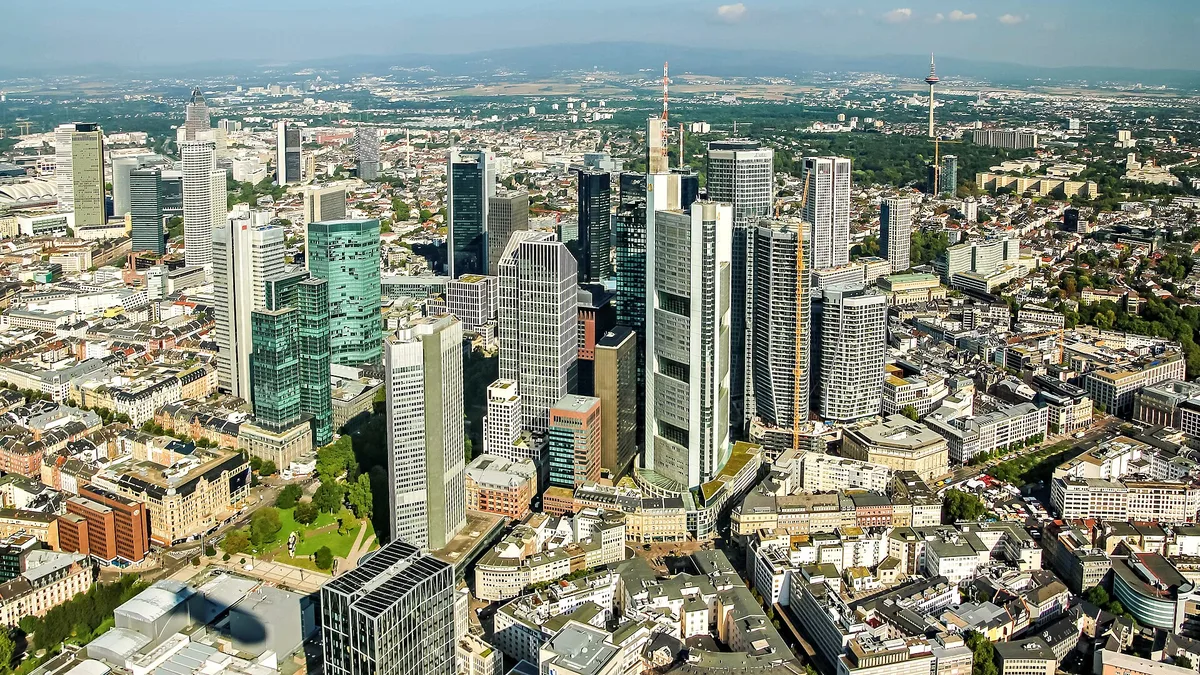
Frankfurt
| Official name | Flughafen Frankfurt am Main |
|---|---|
| IATA code | FRA |
| Operator | Fraport AG |
| Loyalty programme | Miles & More |
| Primary hub for | Lufthansa |
| Annual passenger capacity | Approximately 70 million |
| Terminals | 2 (Terminals 1 and 2) |
| Rail station | Frankfurt Airport long-distance station |
Origin and history
Frankfurt Airport, located in Germany, originated as a base for commercial airships and early aircraft in the early 20th century. Its development as a major aviation hub began in the 1930s with the construction of dedicated passenger terminals and infrastructure. The airport sustained significant damage during the Second World War but was rebuilt and expanded in the post-war decades. A pivotal moment in its history was its selection as the primary hub for the newly founded German flag carrier, Lufthansa, in the 1950s. The opening of a second major passenger terminal, Terminal 2, in 1994 marked a major expansion to handle growing traffic. Continuous development, including a dedicated long-distance railway station and a third terminal project, has characterized its evolution into the 21st century.
What it is for
Frankfurt Airport functions as a primary international gateway for air travel to and from Germany and Central Europe. Its core purpose is to facilitate the transfer of passengers and cargo between a vast network of global destinations, with a particularly strong focus on intercontinental connections. The airport serves as the central hub for Lufthansa and its Star Alliance partners, structuring flight schedules to enable efficient connections. It handles a significant volume of air freight, operating major cargo facilities that are critical for European logistics. The infrastructure supports a wide range of aviation services, including aircraft maintenance, refueling, and ground handling. Furthermore, it integrates with surface transportation networks, providing direct access to high-speed rail, regional trains, and autobahns.
Pros and cons
The integration with the German rail network via its long-distance station provides seamless travel to cities across the country and beyond. However, the airport's immense scale and complex layout, particularly the lengthy transfers between some gates or between Terminals 1 and 2, can be stressful and time-consuming for connecting passengers. High operational costs and stringent security procedures frequently result in longer processing times at check-in, baggage drop, and passport control compared to smaller regional airports. Passengers on budget airlines often face inconveniences, as these carriers typically use more remote gates or the dedicated Terminal 2, which can involve long walks and bus transfers. A common mistake is underestimating the transfer time between flights, especially when changing terminals, which requires clearing security again and can lead to missed connections.
Who it suits
This airport best suits business travelers and frequent flyers whose itineraries require efficient access to a global network of cities, particularly those using Lufthansa or Star Alliance loyalty programs. It is ideal for passengers making intercontinental journeys, as it offers the widest selection of direct long-haul flights from Germany. Cargo shippers and logistics companies benefit from its extensive freight handling capabilities and central European location. The airport suits travelers who prioritize direct rail connections, as its station provides excellent access for those beginning or ending their journey in major German urban centers. It is less suited to leisure travelers on tight budgets flying point-to-point within Europe, who may find cheaper fares and faster processing at secondary airports served by low-cost carriers. Passengers with mobility issues or those who become easily stressed by large, busy environments may find the airport's size and required walking distances challenging.