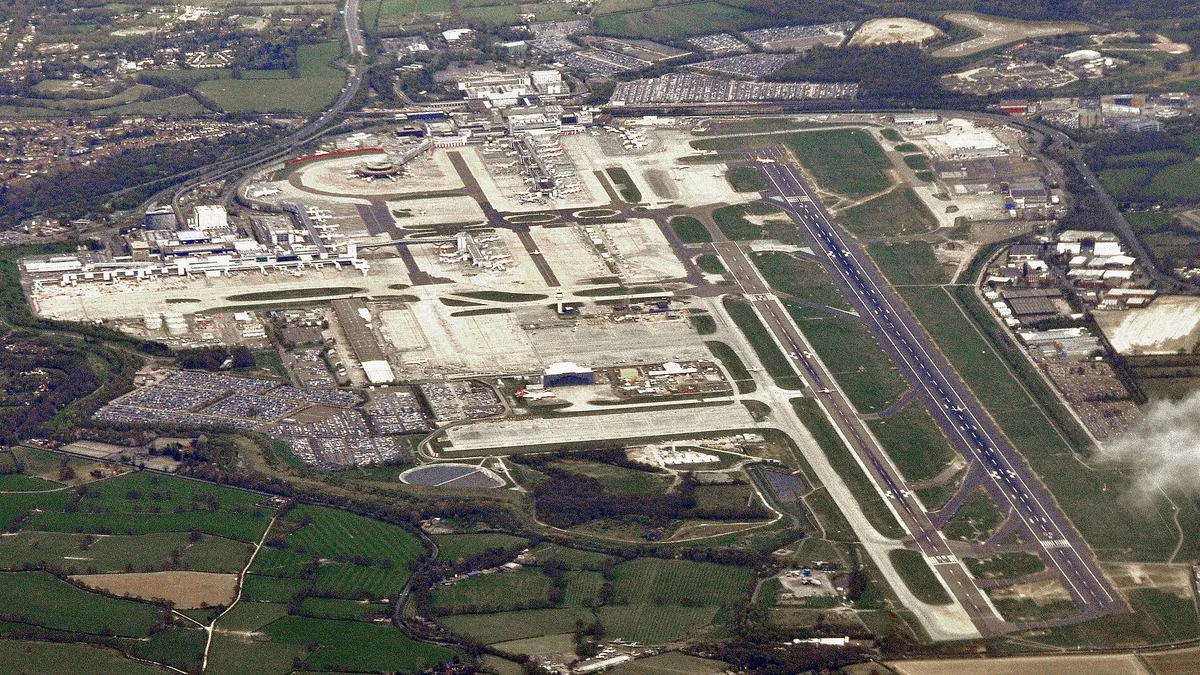
Gatwick
| Official name | Gatwick Airport |
|---|---|
| IATA code | LGW |
| Number of terminals | 2 |
| Rail station | Gatwick Airport Railway Station (on-site) |
| Loyalty programme | Nectar (earning rate varies by partner) |
| Location | West Sussex, England |
| Managed by | Gatwick Airport Ltd. |
Origin and history
Gatwick Airport is located in West Sussex, England, with its origins as an aerodrome dating to the 1930s. The site was originally a private estate before being developed for aviation use, with commercial flights beginning in that decade. The airport's development was significantly accelerated in the 1950s when it was designated by the UK government as London's second airport. A major redevelopment in the late 1950s led to the opening of a new terminal and runway, establishing its modern operational footprint. Ownership has changed several times, transitioning from state control under the British Airports Authority to full private ownership in the late 20th and early 21st centuries. Its history is marked by continual expansion, including the addition of a second terminal in the 1980s and ongoing upgrades to its infrastructure and capacity.
What it is for
Gatwick Airport is a major international airport serving as a primary hub for point-to-point travel to and from London and the South East of England. It functions as a key operational base for several low-cost and full-service airlines, facilitating a vast network of short-haul European and long-haul global destinations. The airport is designed to handle a mix of scheduled passenger services, charter flights, and a limited amount of cargo operations. Its two terminals are structured to manage high volumes of leisure and business travellers, with extensive retail, dining, and passenger service facilities. Infrastructure includes a single main runway, which is one of the world's busiest, and a railway station providing direct links to central London. The airport's purpose is to provide capacity and competition within the London airport system, offering an alternative to Heathrow for both airlines and passengers.
Pros and cons
A primary advantage of Gatwick is its extensive route network, particularly for leisure destinations across Europe, often with competitive fares due to airline competition. The airport's layout, with all facilities in two connected terminals, is generally considered more manageable and less overwhelming than larger hub airports. Direct rail links to London are fast and frequent, providing a reliable transfer option that avoids road congestion. A significant drawback is its susceptibility to delays and disruption due to operating at very high capacity on a single runway, where any incident can cause widespread scheduling issues. Passengers often regret choosing Gatwick for tight international connections, as it lacks the seamless transit infrastructure of a true hub, and self-transfer between separate tickets is logistically challenging. A common mistake is underestimating travel time to the airport, as road access can become heavily congested, and the rail link, while good, is more expensive than equivalent journeys to other London airports.
Who it suits
Gatwick best suits leisure travellers seeking direct flights to holiday destinations across Europe, the Mediterranean, and an increasing number of long-haul vacation spots. It is a practical choice for passengers residing in or travelling to South London, Surrey, and Sussex, for whom the journey is significantly more convenient than to Heathrow. The airport suits passengers who prioritize straightforward point-to-point travel without complex connections, and who are comfortable navigating a busy but single-terminal complex for their flight. It is also a viable base for frequent flyers loyal to its dominant based airlines, such as easyJet or British Airways' short-haul operations, who can accumulate benefits through those specific programmes. Budget-conscious travellers often find it suitable due to the high frequency of low-cost carrier operations, which drives down average fares on many routes. However, it is less suited for business travellers requiring extensive global network connections or for those making complex multi-airline itineraries where a major transfer hub would be more efficient.
Latest Gatwick news
Latest reporting
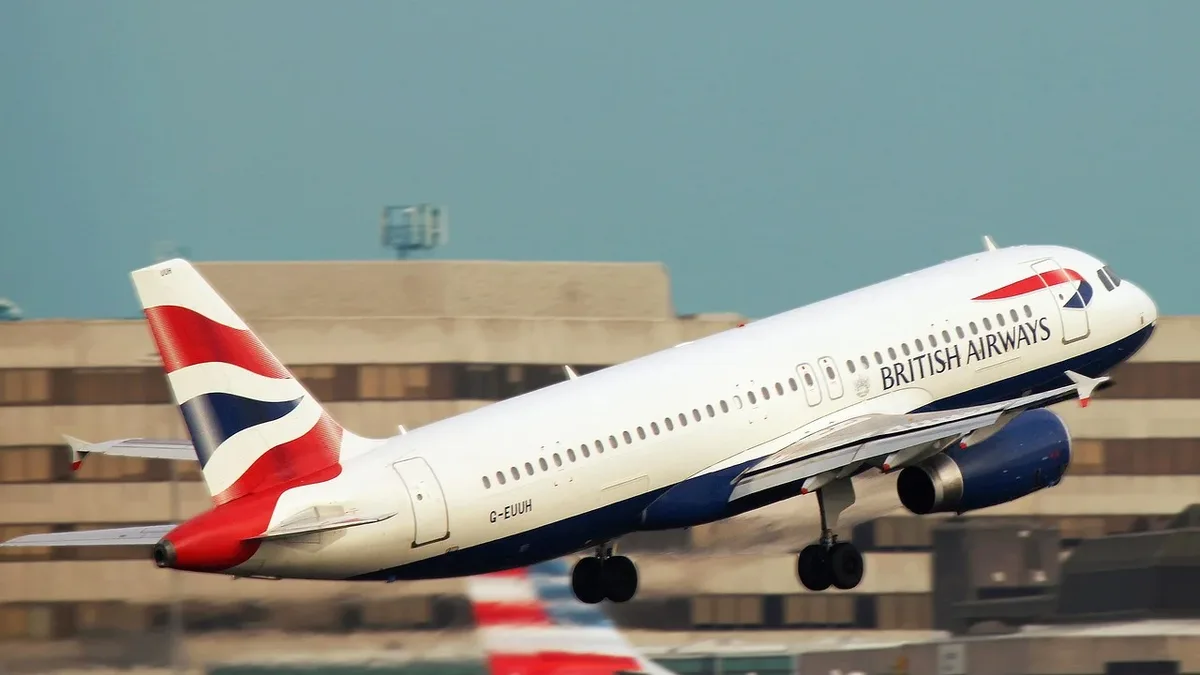
British Airways opens Avios bookings for Kilimanjaro and Zanzibar route
British Airways has opened Avios bookings for its new triangular Gatwick-Kilimanjaro-Zanzibar route launching in May 2027.

Gatwick Airport Offers Discounts for Registered Users
Gatwick Airport's myGatwick program offers various discounts to registered users, including parking and fast track services.