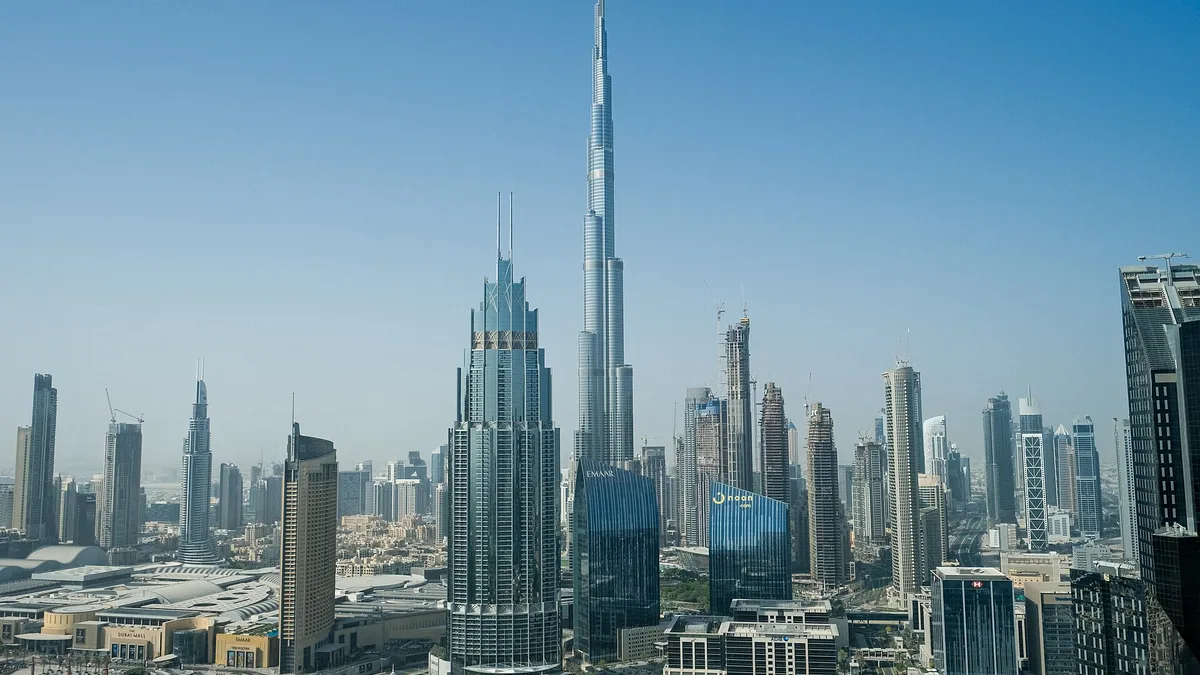
Dubai
| Locale | United Arab Emirates |
|---|---|
| Original use | Fishing and pearling settlement |
| Climate | Hot desert climate |
| Currency | United Arab Emirates dirham (AED) |
| Driving side | Right |
| Official language | Arabic |
| Loyalty programme | Accor ALL, Hilton Honors, IHG One Rewards, Marriott Bonvoy, etc. |
| Common room rates | Subject to seasonal variation and property tier |
Origin and history
Dubai is a city and emirate located within the United Arab Emirates (UAE) on the Arabian Peninsula. Its documented history as a small fishing and pearling settlement dates back to the early 18th century, with the Al Maktoum dynasty establishing itself in 1833. For much of its history, the local economy was sustained by trade, pearl diving, and limited agriculture. The discovery of oil in the 1960s provided the initial capital for transformative infrastructure projects, but reserves were understood to be limited. Strategic decisions from the late 20th century onward deliberately diversified the economy away from hydrocarbon dependency. This led to the focused development of trade, tourism, aviation, and financial services, shaping the modern metropolis.
What it is for
Dubai functions as a global hub for commerce, tourism, and transportation. It serves as a primary gateway for business travel and major conferences in the Middle East, Africa, and South Asia regions. The city is engineered for luxury tourism, offering purpose-built attractions centered on shopping, entertainment, and architectural spectacle. Its extensive airport and airline connections facilitate long-haul stopovers and connecting flights for international travelers. The legal and regulatory framework establishes numerous free zones designed to attract foreign business investment and corporate headquarters. Furthermore, its year-round sunshine and warm climate provide a consistent draw for visitors from colder regions seeking a beach holiday.
Best hotels in Dubai
This category refers to hotels that are destinations in themselves, often noted for superlative design, service, and facilities. Properties such as Burj Al Arab Jumeirah are iconic for their distinctive silhouette and highly personalized butler service. The Atlantis The Royal and its predecessor Atlantis, The Palm are renowned for their expansive aquatic attractions and celebrity chef restaurants. Armani Hotel Dubai, situated within the Burj Khalifa, emphasizes tailored fashion-inspired aesthetics and precision. Jumeirah Beach Hotel offers extensive family-friendly amenities and direct access to a private beach. The Bulgari Resort Dubai provides a more secluded, residential-style luxury with a private marina. These hotels often command premium rates for the immersive experience they provide on-site.
Best hotels for Dubai
This category prioritizes hotels that serve as optimal bases for exploring the city's diverse districts and attractions. Properties in Downtown Dubai, like The Address Downtown and Palace Downtown, offer direct access to the Burj Khalifa and The Dubai Mall. Hotels along Sheikh Zayed Road, including the Rove Downtown and the Dusit Thani, provide central locations with efficient metro links for business and sightseeing. For a traditional atmosphere, options in the Al Fahidi Historical Neighbourhood or Deira place guests near the souks and creek abras. Beach-focused visitors may select from numerous resorts on the Jumeirah Beach Residence strip for its walkable access to retail and dining. Business travelers in the DIFC or Dubai World Trade Centre area benefit from proximity to financial districts.
Dubai review
The experience of Dubai is characterized by its scale, ambition, and climate-controlled environments. Visitors consistently note the efficiency of its infrastructure, from its modern airport and metro to its extensive road network. The sheer concentration of shopping malls, from the massive Dubai Mall to the more traditional souks, underscores a commerce-centric culture. While the beaches are clean and well-maintained, they are largely man-made, and the sea can be calm and warm. Dining options are exceptionally diverse, catering to a vast expatriate population with high-quality international cuisine. A common observation is the city's segmented nature, where ultra-modern districts sit distinctly apart from older trading quarters, often requiring vehicular transport to navigate between them.
Pros and cons
A significant advantage is the reliability of the experience, with high standards of service, safety, and cleanliness consistently delivered across most hotels and attractions. The connectivity through its airline and airport is unmatched in the region, making it a highly accessible destination. However, the cost can be a substantial drawback, as premium pricing applies to hotels, dining, attractions, and even taxi fares, with little available budget accommodation. The summer climate from May to September features extreme heat and humidity, severely limiting outdoor activity. Some travelers find the environment overly manufactured, lacking the historical depth or cultural immersion found in other destinations. A common mistake is underestimating travel times and costs between dispersed attractions, leading to a fragmented holiday.
Who it suits
Dubai is particularly well-suited for first-time visitors to the Middle East seeking a familiar, luxurious, and secure introduction with minimal culture shock. It appeals strongly to families due to its multitude of dedicated theme parks, kid-friendly resorts, and safe, predictable environment. Business travelers and those attending large conferences benefit from its central geographic location and extensive professional facilities. The city is a clear match for enthusiasts of luxury shopping, modern architecture, and high-end dining experiences. Stopover travelers utilizing Emirates or flydubai can efficiently experience the highlights over two to three days. It is less suited for travelers seeking a deep historical journey, adventurous natural landscapes, or a destination with a pronounced traditional local street life.