Qantas Retiring A380s Early
Qantas will retire its 10 A380s from 2028, replacing them with smaller A350s and 787s to increase revenue per seat and focus on premium passengers.
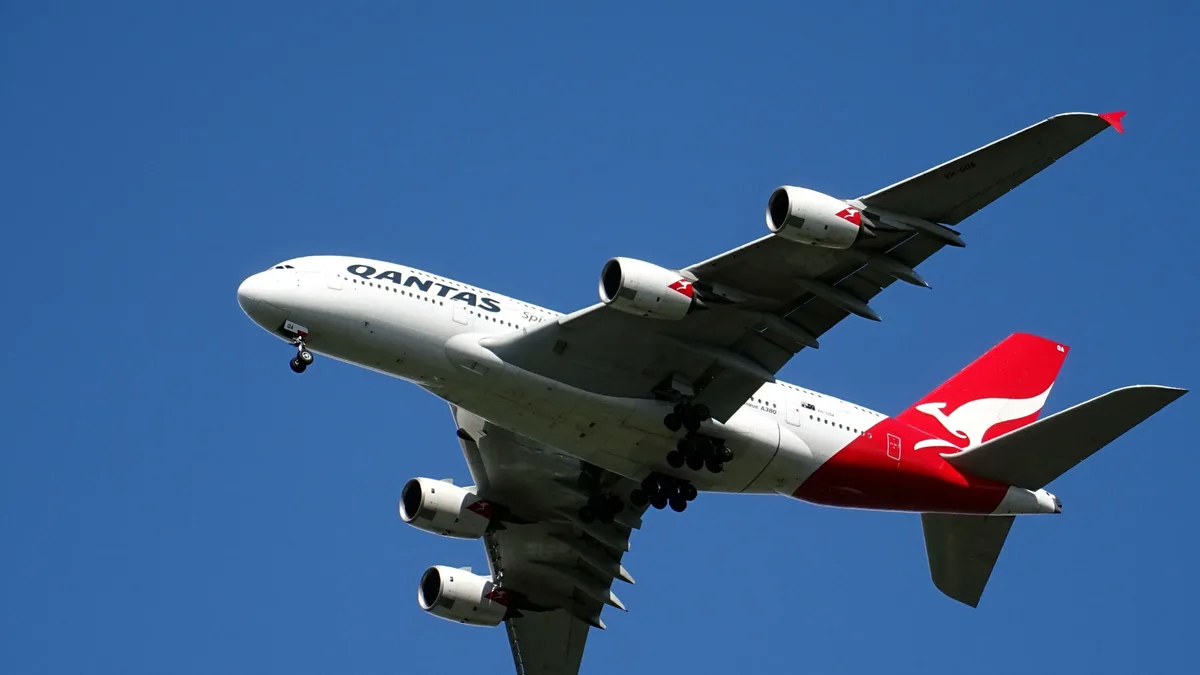
Qantas has confirmed it will begin phasing out its 10 remaining A380 superjumbos from 2028, four years earlier than previously expected. In their place will come a growing fleet of Airbus A350s and Boeing 787 Dreamliners. These aircraft fly further, burn less fuel and, importantly for Qantas, can generate more revenue from substantially fewer seats.
But they are just not as loved by passengers as the A380s are.
The
A380 starts disappearing from 2028
Qantas currently operates 10 A380s, each seating 485 passengers: 14 in First, 70 in Business, 60 in Premium Economy, and 341 in Economy.
They were previously expected to survive until around 2032. Now withdrawals will begin in calendar 2028, although Qantas hasn’t said precisely when the final aircraft will depart. It’s keeping its options open. That’s probably wise given the delays in a host of aircraft deliveries and seat certifications.
The airline says the change reflects increasing maintenance costs and operational risks associated with an aircraft no longer in production. Qantas also says it has greater confidence in the delivery of replacement A350s and 787s. That contradicts my assertion above!
It is hard to argue with the engineering logic. A380 parts and maintenance aren’t getting cheaper. Qantas also has had to deal with a range of technical problems that have taken the 485-seat aircraft out of service, sometimes for days. That either leaves an enormous hole in a timetable or requires Qantas to keep an A380 on standby at all times.
But there is another attraction to its replacements: economics.
Half the passengers are more profitable
Qantas has always been good with the numbers. It has worked out that it can make more money carrying fewer passengers. Compare the A380 to the A350, which carries just 238 passengers (6 First Suites, 52 Business Suites, 40 Premium Economy and 140 Economy seats). That’s fewer than half the seats on an A380 and just 41% as many Economy seats.
Qantas gives investors the example of Sydney to Dallas, where Qantas expects switching from an A380 to an A350 to deliver around a 10 to 12% operating margin.
There is no escaping the underlying strategy. Put fewer seats into a market, devote a larger proportion of them to premium cabins, and try to earn considerably more from each one. That is the new Qantas strategy. So, where do those leftover Economy passengers go? Well, to Jetstar, silly. Qantas Group is not catering to its less profitable customers.
So don’t expect the A350 to usher in an era of bargain Economy fares. Qantas mainline is going premium, baby!
Qantas is for premium passengers
The strategy makes sense when you look at where Qantas is making its money.
International premium cabin revenue grew 15 % during FY26. That’s twice the growth rate of Economy. In contrast, Qantas says premium demand remains strong on long-haul services.
The A350-1000ULR takes that philosophy considerably further. About 41% of its seats are First, Business, or Premium Economy, compared with around 30% on the A380 and the existing 787 fleet.
So, Qantas isn’t just replacing old aircraft. It is changing what sort of passenger its Qantas international fleet is designed around.
The future long-haul fleet
Qantas has 24 Airbus A350-1000s coming.
The first 12 are the specially modified A350-1000ULRs for Project Sunrise. The first aircraft is due in April 2027, with Sydney-London non-stop services scheduled to begin in October 2027. Sydney-New York will follow.
Another 12 standard A350-1000s are due from FY28 for the broader international network.
There are also 12 additional Dreamliners on firm order. Four 787-9s and eight larger 787-10s are due from FY28. Those aircraft, together with the A350s, will progressively replace both the A330s and A380s. The new Dreamliners will introduce Qantas’ next-generation Business seat with greater space, sliding privacy doors and larger entertainment screens.
Qantas is now discussing converting around 20 additional Airbus and Boeing purchase rights into firm widebody orders for delivery from 2030.
Same strategy domestically
Qantas has ordered 48 A321XLRs to progressively replace the Boeing 737. The current 197-seat configuration offers 20 Business seats and 177 Economy seats, while 16 aircraft arriving from 2028 will receive lie-flat Business seats suitable for longer flights into Asia and the Pacific.
QantasLink, meanwhile, is building towards a fleet of 29 Airbus A220s, replacing the Boeing 717 and opening longer thin routes which previously required larger aircraft or connections.
Flexibility and fuel efficiency seem to be the magic words. Qantas will be able to increasingly match an aircraft to a market instead of filling a very large aircraft simply because that’s what’s available.
What happens to airfares?
During the second half of FY26, surging fuel costs prompted changes in both fares and capacity. For the first half of FY27, Qantas is forecasting domestic and international unit revenue to rise by 8-10%, while domestic capacity is expected to fall by 3%.
None of that guarantees that every ticket will become 10% more expensive. There is always competition from Virgin Australia, international airlines, and Jetstar’s economics.
But the direction Qantas is heading is clear, and it also seems to follow a market trend. Premium is the place to be currently, with the increase in rich baby boomers now reaching the age when they can spend that compulsory superannuation on travel, in comfort. That baby-boomer bump did all that cheap travel at the back of the 747 Jumbo back in the 1980’s.
Now they can afford the comfort they need at the front of the plane.
For Qantas, the profit is no longer in maximising the passengers it carries. Now its in maximising the revenue per passenger.
2PAXfly Takeout
I’ll miss the A380. Even after nearly two decades, it remains the only aircraft where boarding feels like the beginning of an event for me.
Its departure also marks something bigger: the consolidation of bulk passenger carriage into a hub. The hub-and-spoke model of aircraft travel. The new model is about A350s and 787s, and, indeed, A321XLRs flying smaller groups of passengers farther, more directly, and with a much heavier emphasis on premium cabins.
We might be seeing the end of the A380, but we are getting newer, quieter aircraft, better seats, and more direct routes.
Source: boardingarea.com