APAC Hotel Investment Shifts to Existing Assets
Hotel investment in Asia Pacific surged 52% to $17 billion in 2025, with buyers favoring existing properties over new builds due to high costs.
Hotel investment transactions in Asia Pacific reached $17.0 billion in 2025, a 51.9% increase from the $11.2 billion recorded in 2024. According to the APAC Hotel Transactions and Market Outlook report from Global Asset Solutions, investors are increasingly acquiring existing hotels for repositioning rather than funding new construction.
Expensive financing, high labour costs, and supply chain issues have restricted new development. Alex Sogno, CEO of Global Asset Solutions, stated that the cost and complexity of new builds make it difficult to achieve target returns. "In many markets, buying an existing hotel and improving or converting it makes considerably more sense than building a new one," he said.
Transaction Trends and Pricing
While upscale, midscale, and economy hotels accounted for most transaction volume, luxury assets showed strong pricing power. The share of luxury transactions fell from 41.1% of the market in 2024 to 16.1% in 2025. However, the average price per key for luxury hotels rose 24% to approximately $585,000.
Sogno noted that luxury is increasingly the only segment where room rates can justify new construction costs. "Luxury hotels have pricing power because supply is limited, but the broader hotel market remains under significant pressure," he explained.
Key Market Performance
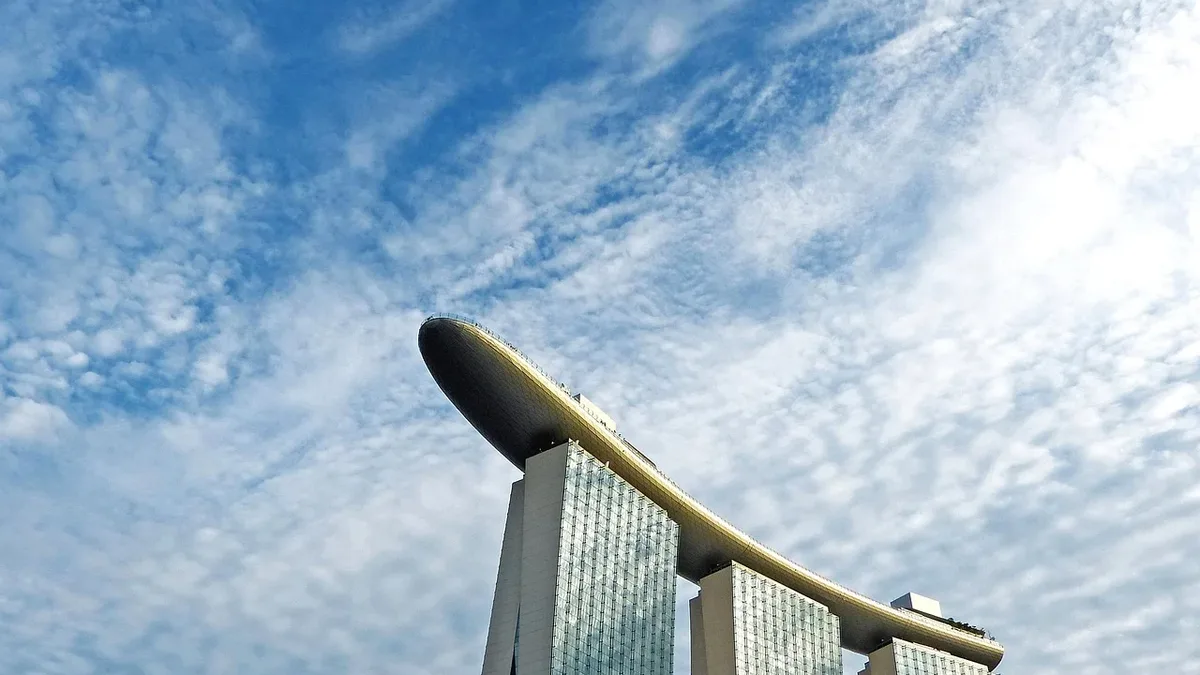
Singapore remained the region's most expensive hotel market. The average price per key across all segments was approximately $656,000. Australia recorded the highest luxury pricing at about $673,000 per key, driven by deals involving the Park Hyatt Melbourne and The Ritz-Carlton Perth.
| Market | Segment | Average Price Per Key (USD) | Notable Transaction |
|---|---|---|---|
| Singapore | All Segments | ~656,000 | - |
| Singapore | Upscale | ~636,000 | - |
| Singapore | Luxury | ~701,000 | JW Marriott Hotel Singapore South Beach |
| Australia | Luxury | ~673,000 | Park Hyatt Melbourne, The Ritz-Carlton Perth |
International travel continues to support the regional market. Japan welcomed 42.7 million international visitors in 2025, while South Korea recorded 18.9 million. Singapore's tourism receipts hit a record SGD 32.8 billion ($25.8 billion).
The Rise of Active Management
The report emphasizes that simply owning a prime hotel is no longer sufficient. Higher operating costs and sophisticated guests require active performance management. This is particularly critical for luxury hotels, where high costs can quickly erode the benefits of strong average daily rates.
The objective is not simply to protect revenue, but to maximise the conversion of revenue into sustainable cash flow and ultimately asset value, Sogno stated. He added that the next phase will be less about market growth and more about capturing value within each asset.
Japan's transaction activity illustrates the broader trend. Of 122 deals in the 18 months to June 2026, 90 involved midscale and economy hotels. Luxury supply remains constrained, with new Tokyo openings delayed.
Geopolitical uncertainty, rising interest rates, and inflationary pressures are increasing the need for specialist asset management. Sogno warned that investors relying on bullish performance assumptions are taking on more risk. Changes in travel patterns and airfare costs can directly impact hotel demand, making sustained growth harder to underwrite.
The opportunity for value creation now lies primarily in the existing hotel stock. Investors are advised to identify underperforming assets and unlock their potential through active management and strategic repositioning.